
Accounting Cheques in Canada vs. EFT
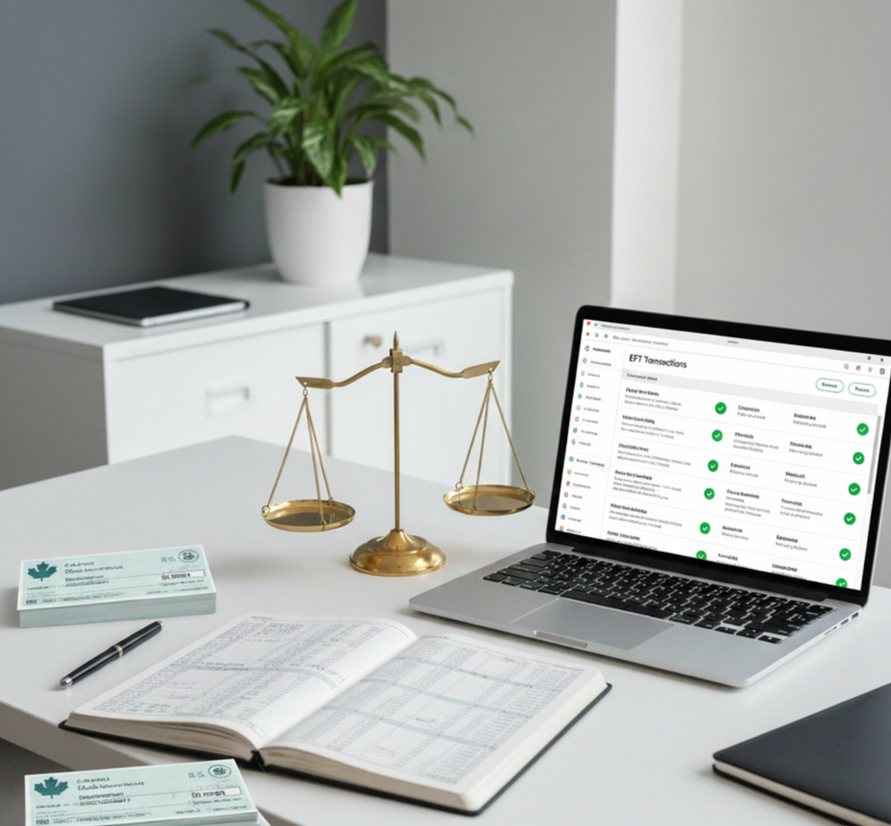
Accounting Cheques in Canada vs. EFT: When Paper Still Wins for Small Businesses
Running a small Canadian business isn’t about chasing every shiny new tool, it’s about choosing the payment method that actually fits your workflow. Electronic funds transfer (EFT) is fast and convenient, no doubt. But there are plenty of moments when accounting cheques are the better move: cleaner controls, clearer documentation, fewer surprises. Here’s a practical look at when paper still wins, and how to set it up right.
EFT’s strengths, and its blind spots
EFT shines for recurring, predictable payouts like fixed-rent and subscription bills. It reduces envelope time and gets vendors paid instantly. But in exchange for speed, you sometimes give up fine-grained control. If a file is uploaded incorrectly or a rule fires the wrong way, money can move before you catch it. And for certain vendors, especially trades, independent contractors, or small suppliers, banking details aren’t always on file or they simply prefer a cheque for their records. In these cases, a well-formatted cheque is faster than waiting for onboarding.
Where cheques quietly outperform
Cheques win when context matters. The memo line and detachable stub create a built-in paper trail that travels with the payment. Auditors and bookkeepers love it because reconciliation becomes obvious: invoice numbers, job codes, and notes appear exactly where you need them. Cheques are also useful for one-off, variable payments where you want the final review at the moment of signing. That last human pass, date, amount, payee, catches many of the errors that slip through automated runs.
If you want your software to do the heavy lifting while keeping paper flexibility, look at computer cheques. They line up with popular accounting systems so totals, payees, and remittances print precisely, no fiddling with margins.
Cash-flow control you can hold
With EFT, the money’s gone the second the file clears. Cheques, by design, create a natural float, often a day or two, which can be a lifesaver during tight weeks. That small buffer lets you sequence payments against incoming receipts and keep vendor relationships smooth without overdrafting. It’s not about stalling; it’s about intentional timing.
Disputes and documentation, simplified
When a payment is contested, cheques offer physical evidence: the original, the copy, and the bank-cleared image. That’s powerful when you’re proving who was paid, when, and for what. EFT records can be perfectly fine, but the stub-level detail on a cheque often shortens the back-and-forth.
Security myths vs. modern reality
A frequent objection: “Aren’t cheques less secure?” Not if you choose modern security features. Today’s cheque stock includes MICR-true printing, chemical wash detection, microprint borders, toner adhesion, and copy-void screens. Get familiar with the difference-makers here: Security features in modern cheques, what to look for. The right safeguards dramatically reduce alteration risk and keep banks happy at deposit.
Picking the right cheque format for the job
If you print from QuickBooks, Sage 50, or similar, go with voucher-style computer cheques that include two stubs for easy filing, again, start with computer cheques for alignment that just works. Prefer hand-written control in the field or at a job site? Keep a book of manual business cheques in the truck or desk drawer. Both options can be branded with your logo and business details for a professional look that doesn’t interfere with bank scanning.
A practical hybrid: use both, on purpose
The smartest setup many Canadian owners adopt is hybrid:
- EFT for fixed, recurring expenses with zero variance.
- Cheques for ad-hoc payments, variable bills, final-inspection payouts, or anything needing more review and clearer documentation.
This approach gives you speed where it helps and control where it counts.
Implementation tips that save headaches
- Standardize stubs with invoice numbers, project names, and approval initials to tighten audit trails.
- Use MICR toner/ink and a straight-through paper path for crisp code lines.
- Lock down approval: one person prepares, another signs, that simple separation reduces errors and fraud.
- Keep a small buffer of manual cheques for emergencies, courier pickups, last-minute deposits, or when banking info is unavailable.
Bottom line
EFT is terrific, until the situation calls for precision, documentation, or timing. That’s where accounting cheques earn their keep. Equip your team with software-aligned computer cheques for everyday runs and manual cheques for the moments that demand a personal, verifiable touch. Done right, you’ll spend less time fixing payment mistakes and more time running the business. Explore computer cheques, keep manual business cheques on hand, and review modern security features so your payments are fast, controlled, and bank-ready.
Recent Posts
-

What to Check Before You Order Cheques Online Canada
What to Check Before You Order Cheques Online Canada Ordering cheques online beats standing in line
-

How Do I Order Business Cheques Online in Canada Without Bank Issues?
How Do I Order Business Cheques Online in Canada Without Bank Issues? You pick a cheque style, uploa
-

Accounting Cheques in Canada vs. EFT
Accounting Cheques in Canada vs. EFT: When Paper Still Wins for Small Businesses Running a small Can